
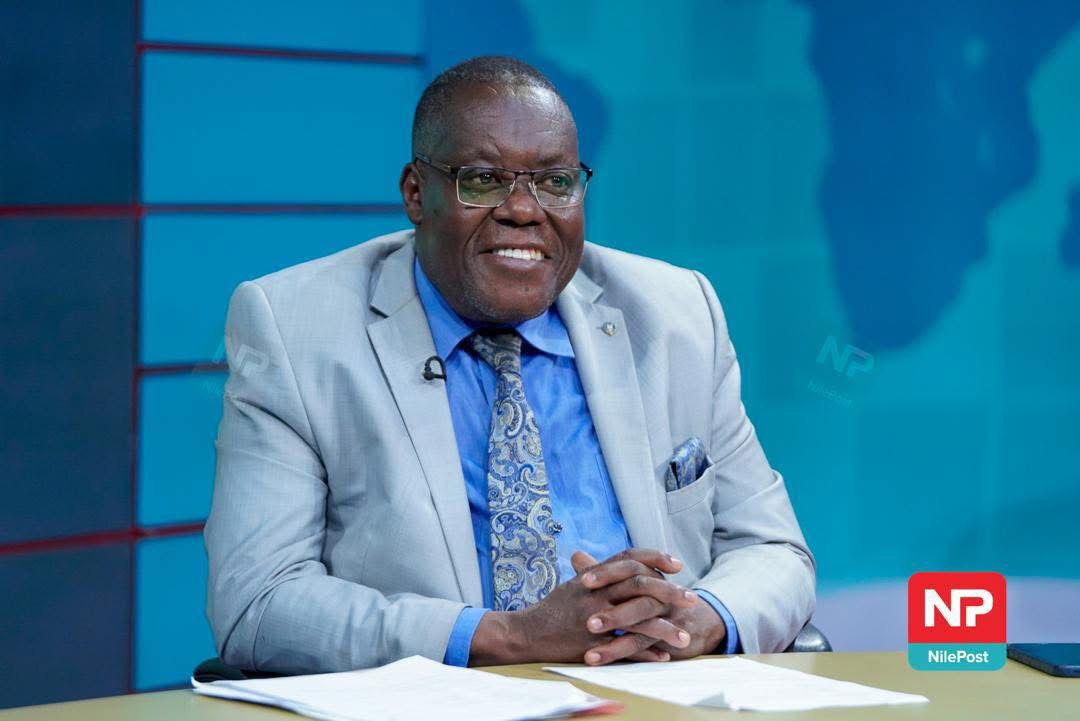
The kingdom of Buganda has warned that the current form of the Protection of Sovereignty Bill, 2026, risks undermining constitutional freedoms, disrupting development partnerships, and negatively affecting Uganda’s broader national interest.
In a letter dated April 13, 2026, the kingdom’s Attorney General, Christopher Bwanika, urged careful reconsideration of the draft law before it advances further in Parliament.
Bwanika referenced Article 246(1) of the 1995 Constitution, which provides for the existence of traditional institutions, as well as provisions of the Traditional Rulers Act mandating cultural preservation and community development.
He stressed that its engagement on policy matters is legally grounded and aligned with national development goals.
Bwanika further raised concern on the bill’s definition of “foreigner” and “agent of a foreigner.” He argued that the definition should be based on citizenship rather than geography, noting that Ugandans living abroad do not lose their citizenship under Article 11 of the Constitution.
He stated the significant role of the diaspora, noting that many Ugandans abroad “religiously maintain deep cultural, economic and familial ties to Buganda” and contribute to initiatives such as “Buganda Bumu Conventions,” “Oluwalo waffe,” and the “Kabaka Birthday Run.”
Bwanika warned that under the bill, such contributions could be classified as foreign funding, while recipients could be labelled “agents of foreigners.” He described this as “a profound injustice,” adding that “there’s need to add an explicit carve-out for cultural, private, commercial and family transactions between Ugandan citizens and their families or communities.”
Bwanika also noted the Kingdom’s partnerships with international development organizations including UNAIDS, UNESCO, and USAID.
It warned that the bill’s provisions could result in the Kingdom and its affiliated entities being classified as “agents of foreigners” in respect of nearly all externally supported programs.
Concerns were further raised about Clauses 7 and 8, which the Kingdom says fail to distinguish between legitimate civic engagement and foreign-directed interference. He cautioned that any public engagement on issues such as land rights, health, education, or agriculture could be interpreted as unlawful influence if linked to foreign support.
Particular criticism was directed at Clause 13, which introduces the offence of “economic sabotage.”
“A Kingdom of Buganda Official who publicly raises concerns about the economic impact of a given Government Project could be prosecuted for economic sabotage,” the statement read.
The penalties, including fines of up to Shs 2 billion and imprisonment of up to 20 years, were described as excessively harsh and inconsistent with constitutional guarantees on freedom of expression and participation.
Bwanika described the proposed threshold of Shs 400 million in annual foreign funding without ministerial approval as unrealistic, particularly for institutions engaged in large-scale development programs.
He warned that penalties for non-compliance, including fines of up to Shs 4 billion and forfeiture of funds, could severely disrupt operations and even violate constitutional protections on property rights.
Bwanika noted that the requirement for registration under Clause 14 and its affiliated entities, including foundations supporting cultural and development initiatives, could be required to register separately as “agents of foreigners,” creating what it described as an administrative burden that could “cripple operations.”
Privacy concerns were also highlighted in relation to Clause 21, which mandates public disclosure of funding sources.
The kingdom argued that this could deter diaspora contributions, noting that many individuals give “on the basis of cultural trust and voluntary solidarity” and value their privacy. It warned that the provision may conflict with constitutional protections on privacy and existing data protection laws.
The bill’s impact on financial systems was another point of concern. Under Clause 25, banks and money transfer operators would be required to verify ministerial approval before processing certain transactions.
Bwanika cautioned that this could delay the disbursement of funds for critical programs, despite existing regulatory frameworks already addressing transparency concerns.
Beyond institutional implications, Bwanika warned of broader economic risks. He argued that increased regulation could deter foreign investment and lead to capital flight, noting that Uganda competes with other East African Community states for investment and development financing.
He cautioned that the bill “will definitely scare away many potential investors” and could result in capital being redirected to countries with lighter regulatory environments.
The Protection of Sovereignty Bill, 2026, tabled by State Minster for Internal Affairs David Muhoozi, seeks to limit foreign influence in political, economic, and civic spaces. It introduces strict oversight of foreign funding, expands regulation to digital platforms, and creates new criminal offences with significant penalties.
While government officials have defended the bill as a necessary safeguard against foreign interference, it has drawn criticism from civil society, legal experts, and economic stakeholders who warn that its broad scope could restrict fundamental freedoms and disrupt development partnerships.
“We believe that the spirit of this intended law is to ‘promote the interests of Uganda’ and the sovereignty of the country,” Bwanika stated, adding that this objective “can’t be served by the draft law in its current state.”
